UNKNOWN WOMEN





"The infinite fold separates or moves between matter and soul, the façade and the closed room, the outside and the inside"
Deleuze, The Fold
A boudoir (/buːˈdwɑːr/; French: [bu.dwaʁ]) is a woman's private sitting room or salon in a furnished residence, usually between the dining room and the bedroom, but can also refer to a woman's private bedroom. The term derives from the French verb bouder (to sulk or pout) or adjective boudeur (sulking)—the room was originally a space to withdraw.
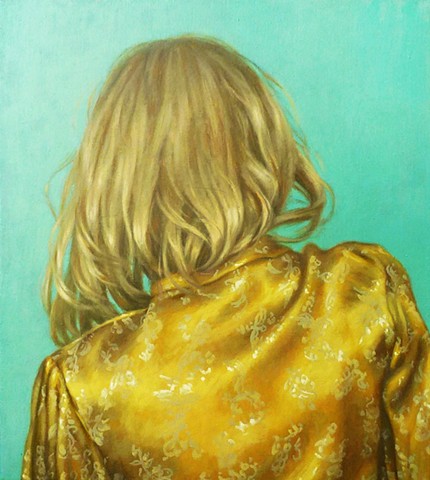
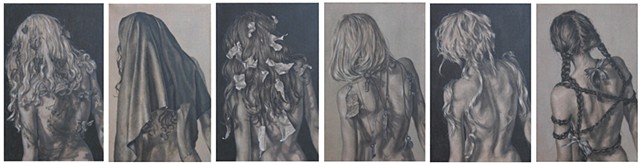
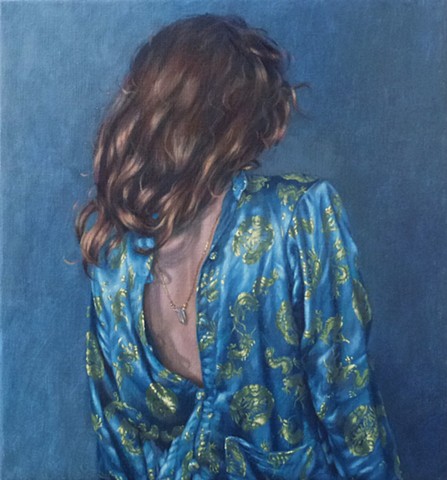
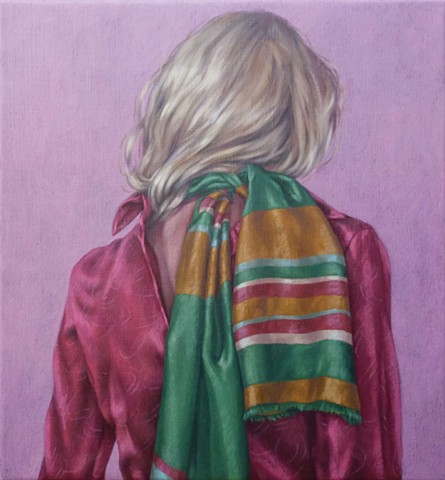
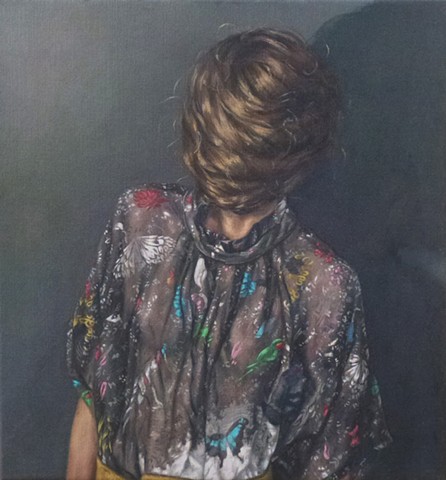
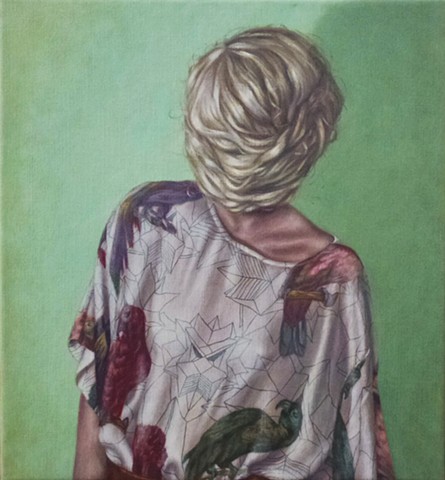
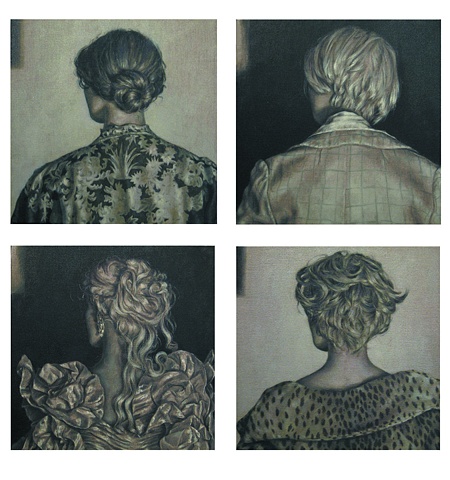
The Unknown Women series poses questions surrounding representation, spectatorship, and the material construction of identity through repeated depictions of a single mannequin figure. Each painting reproduces the same view, the back of a head and shoulders, in an identical somewhat uncomfortable pose. The figure’s impenetrable stillness seen close-framed renders the body both familiar and estranged, poised between human likeness and objecthood.
While composition remains constant, variations in scale, chromatic intensity, and attire generate a spectrum of apparent identities. The mannequin is dressed in synthetic wigs and garments that simulate individuality but reveal, through their overt artificiality, the mechanisms of imitation itself. What initially appears as a sequence of figures gradually exposes itself as an investigation into repetition, difference, and the instability of representation.
Colour plays a critical role in this inquiry. The vivid, saturated palette enlivens the mannequin’s surface with a semblance of vitality, while simultaneously emphasizing its lifelessness. Scale further mediates the viewer’s experience: at enlarged dimensions, the figure asserts an unsettling monumentality; when reduced, it reverts to its commercial function as a display object.
Through this sustained engagement with a single artificial form, the series interrogates the processes by which the gaze confers identity and presence upon the inanimate. It reflects on the cultural production of femininity and the ways in which visual systems such as fashion, portraiture, and commerce, construct and circulate ideals of the body. Ultimately, the work situates the mannequin as a site of both projection and critique: a synthetic subject through which the conditions of representation are laid bare.
2026
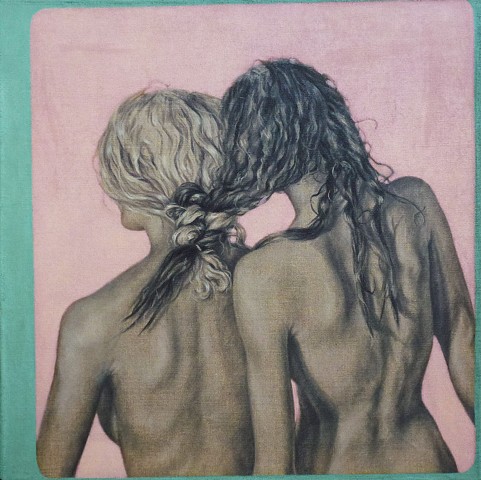
'We find ourselves irresistibly drawn to Halls' Unknown Women, the identities of the artist's subjects, as the title suggests, forever eluding us, perpetually refusing our gaze. We cannot help but wish to turn the women round to see their faces, to lift the plate or unpin the paper which covers them, and yet they evade our curiosity, offering to disclose only a glimpse.
Just as the unidentified subject of Baudelaire's poem La Chevelure, a hymn to a beautiful head of hair, inspires the lover to 'sow rubies, pearls and sapphires' into the 'ebony sea' of her 'strong tresses', Halls, in her Chevelure series, adorns her women with clues as to their identity, or of what they may be in the process of passing through.
A suggestion of metamorphosis is made all the more explicit in Nest I & II in which the hair envelopes each female's head as if to form a cocoon. The vivid beauty of the garments, their fabric alive with butterflies and birds contrasts with the obscured faces of these enigmatic women.
Uncanny despite their apparent simplicity, the protagonists seem poised in a state of liminality. Enticing yet unsettling, charged with possibility, Halls' Unknown Women leave us longing.
“The quiet mystery of a head which will never turn, intimate yet remote, the face forever unseen, is a subject I have found myself drawn to investigate repeatedly.
My figures may seem frozen in a place of stasis and reflection, perhaps in the eye of the storm, attempting to reconfigure themselves held on the cusp of transformation or poised before their next performance, always on the verge of some private evolution” '.
Unknown Women exhibition text 2015